

 Sign In
 0
0Main content starts here
How to Care for Tent and Tarp
Maximizing the lifespan and enjoyment of your tents and tarps
Here we introduce how you can maintain your tents and tarps. Make sure to thoroughly clean and dry completely before storing.
Here we introduce how you can maintain your tents and tarps. Make sure to thoroughly clean and dry completely before storing.
Tents and tarps are essential for various activities such as mountain climbing, camping, bike touring, and kayaking. However, depending on how you store your gear after use can alter performance, and reduce your gear's ability to provide a comfortable living space. Here, we will introduce maintenance methods to help you maximize the lifespan and enjoyment of your tents and tarps.
Key points for long-lasting use
We have compiled key points on usage and maintenance methods based on repair request data received by Montbell Customer Service. Here, we explain how to prevent damage and deterioration.
Tent and tarp repair requests received by Montbell Customer Service
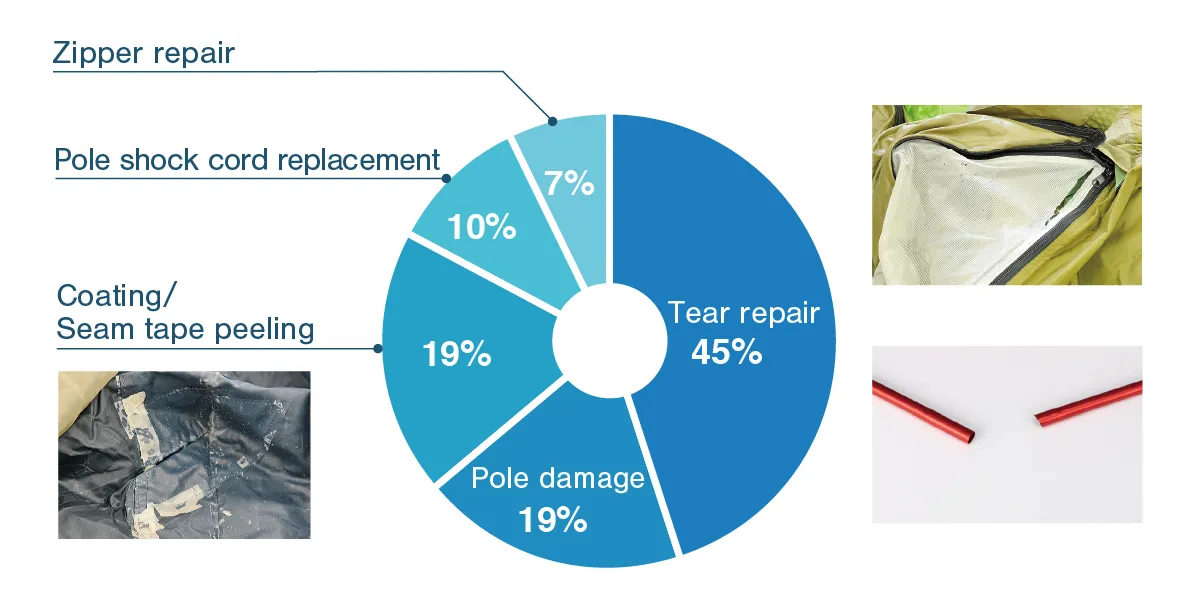
Preventing tears
If a tent is blown away by the wind and rolls along the ground, countless tears can occur along the poles in the flysheet. When setting up or taking down a tent in strong winds, the timing of pegging down (and releasing) is crucial.
Preventing pole damage
Although poles have sufficient resistance to wind, unexpectedly strong winds can damage or band poles. When choosing a location to set up your tent, it is important to consider factors such as terrain and wind direction.
Preventing degradation of pole shock cords
When storing the poles, fold them from the middle rather than from the ends. This ensures that the tension on the internal shock cord is evenly distributed, making the elastic last longer. If you feel that the cord has become stretched, it's time to replace it.
Preventing coating deterioration
The waterproof coating on rain flies and groundsheets naturally deteriorates over time, but if dirt and moisture are left on them during long-term storage, it can negatively affect the coating and accelerate its deterioration. This can also lead to mold growth. Additionally, if left hanging outdoors in direct sunlight for extended periods, UV rays can significantly weaken the coating's strength. Before storing these items, it's necessary to clean and dry them.
Preventing zipper malfunctions
Zippers are delicate parts, so please operate them carefully to avoid catching fabric or debris (such as sand) when opening and closing. If you feel any resistance while operating the zipper, do not force it. Instead, slowly move it back in the opposite direction and try to remove anything caught inside the slider.
Washing Instructions
To ensure long-lasting use, proper washing is also important. Make sure to thoroughly clean off any dirt and store the item after it has dried completely (the same washing method applies to rain flies and tarps).
1. Turn inside out and spread out
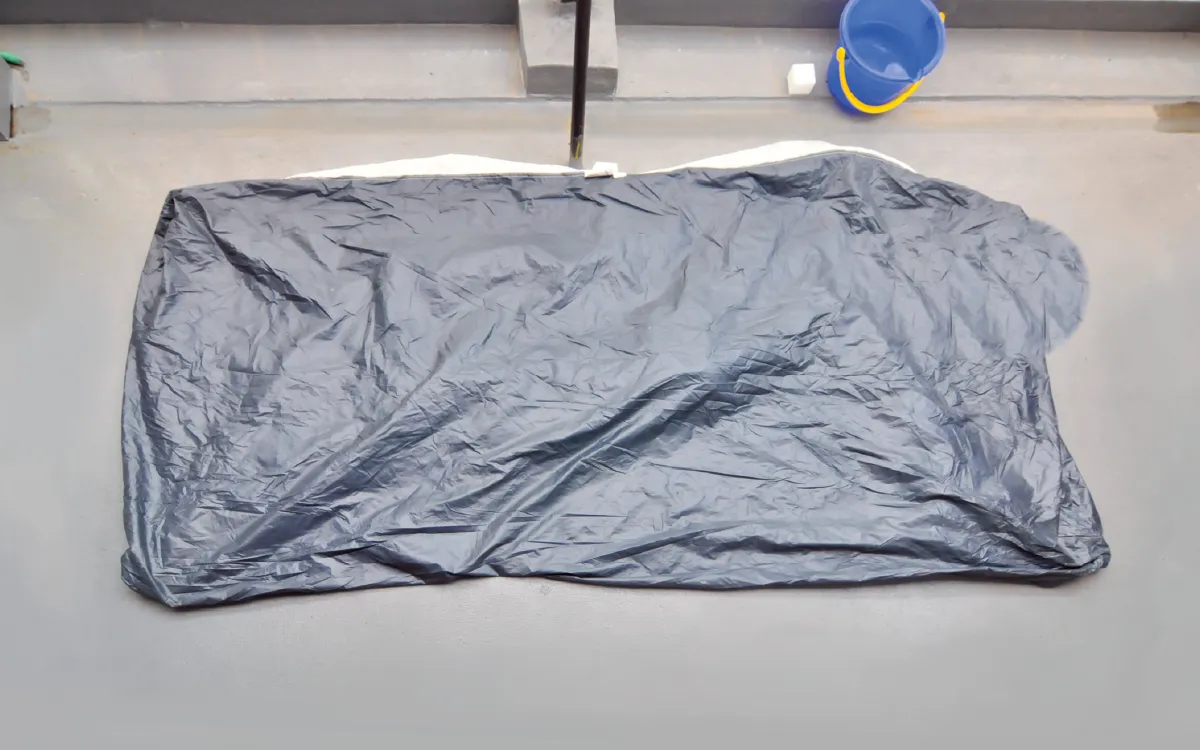
Open the zipper fully, turn the tent inside out so that the interior is facing outwards, and spread it out with the tent floor facing up. If you don't have space to spread it on the ground, you can hang it on a clothesline or similar. You can also wash it little by little in a place where water can be used without issues, such as in a bathroom.
2. Washing and rinsing the inside of the floor
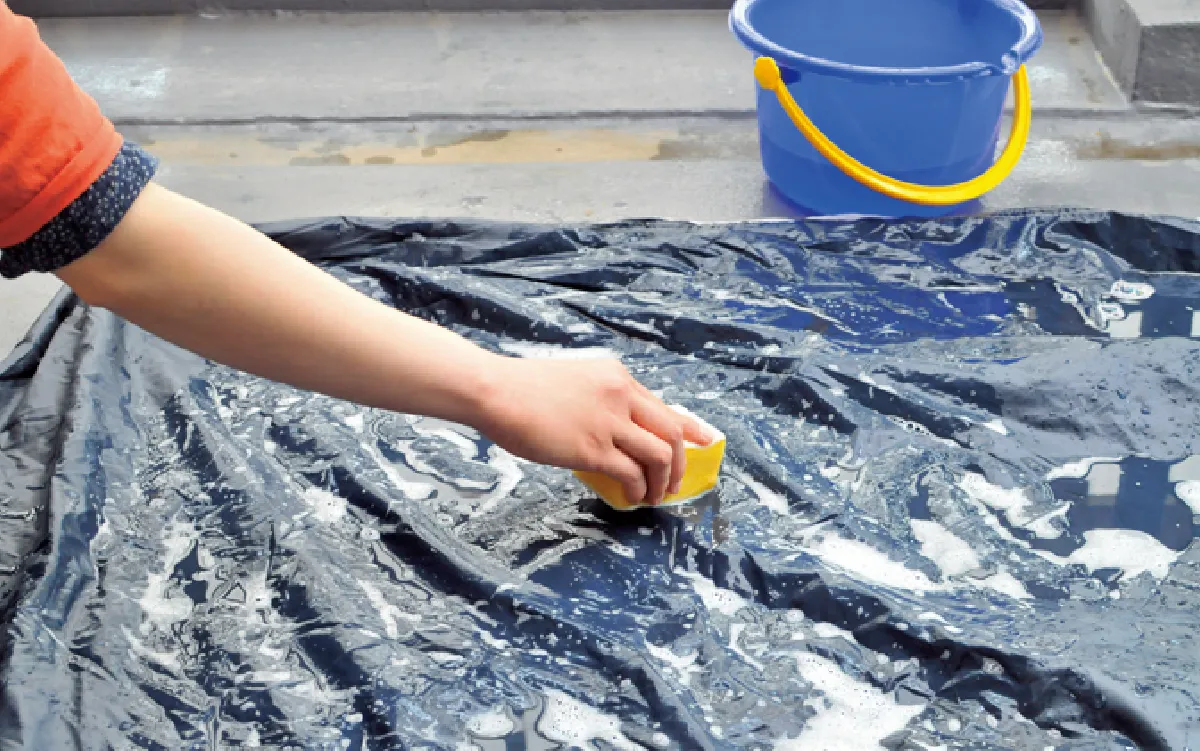
For heavily soiled areas, wash with a sponge using detergent, then rinse thoroughly.
3. Turn it back to its original position
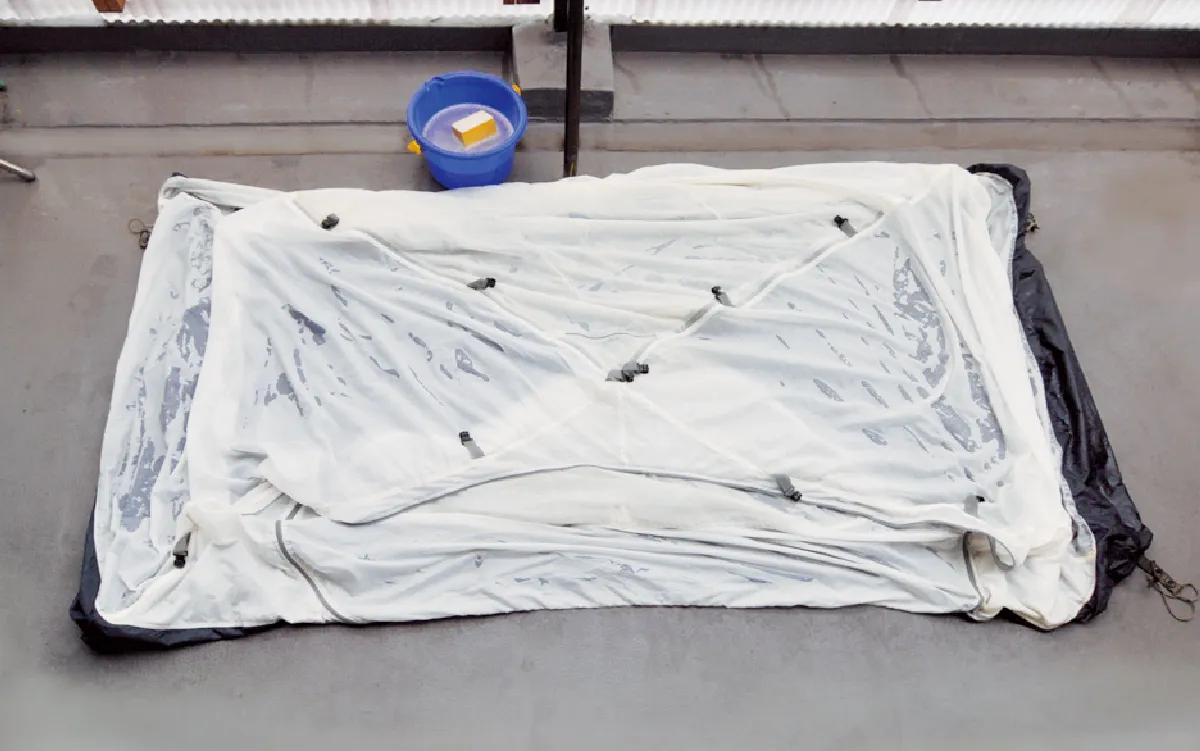
Turn the tent right side out, then spread it out with the tent floor facing down.
4. Washing and rinsing the canopy
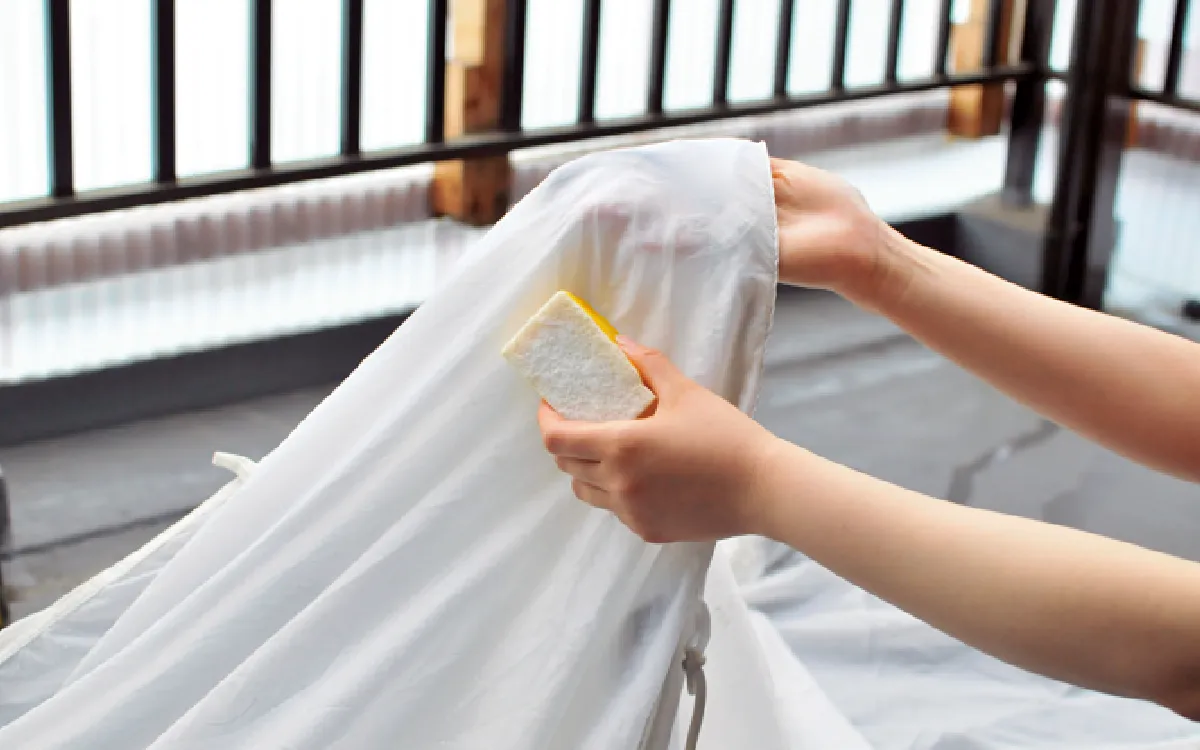
Wash both sides of the canopy (the mesh part of the main body and the upper part of the tent) and rinse thoroughly.
For two-layered parts such as the entrance, open the zipper and wash each layer separately.
5. Washing and rinsing the tent floor
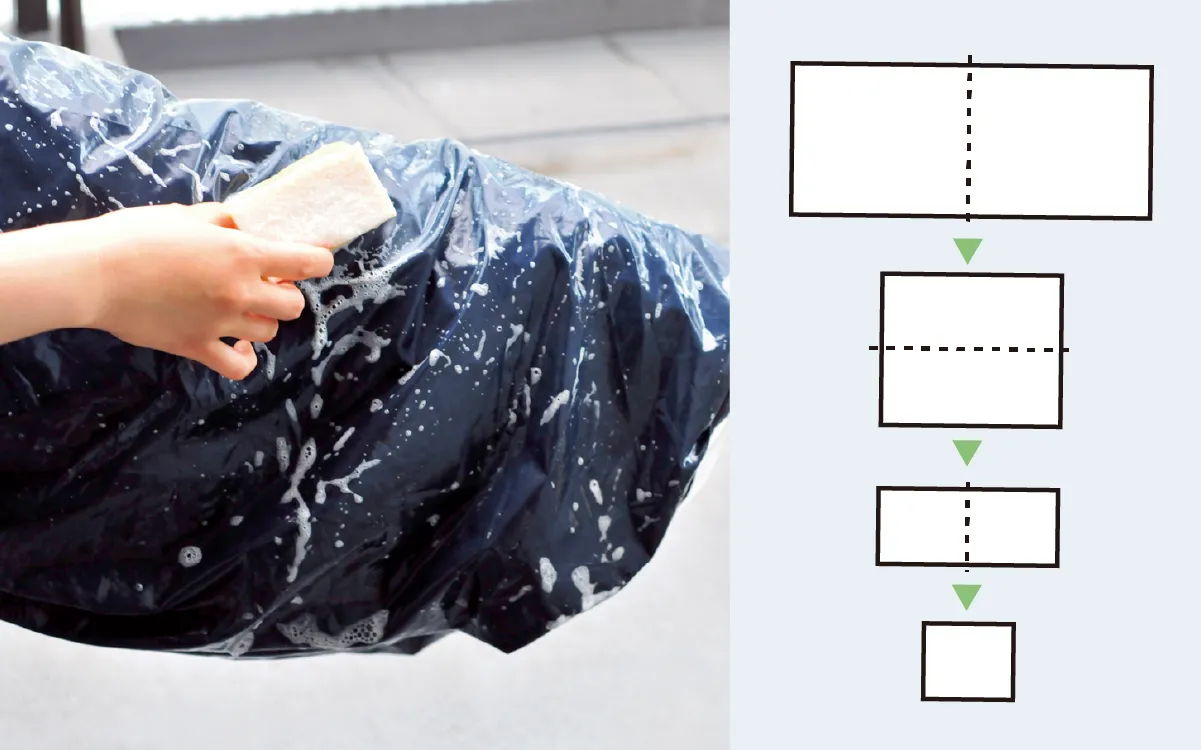
Wash the floor surface thoroughly and rinse it well. As shown in the figure, if you wash while folding it in half, you can finish washing without dirtying the cleaned surface.
6. Dry in the shade
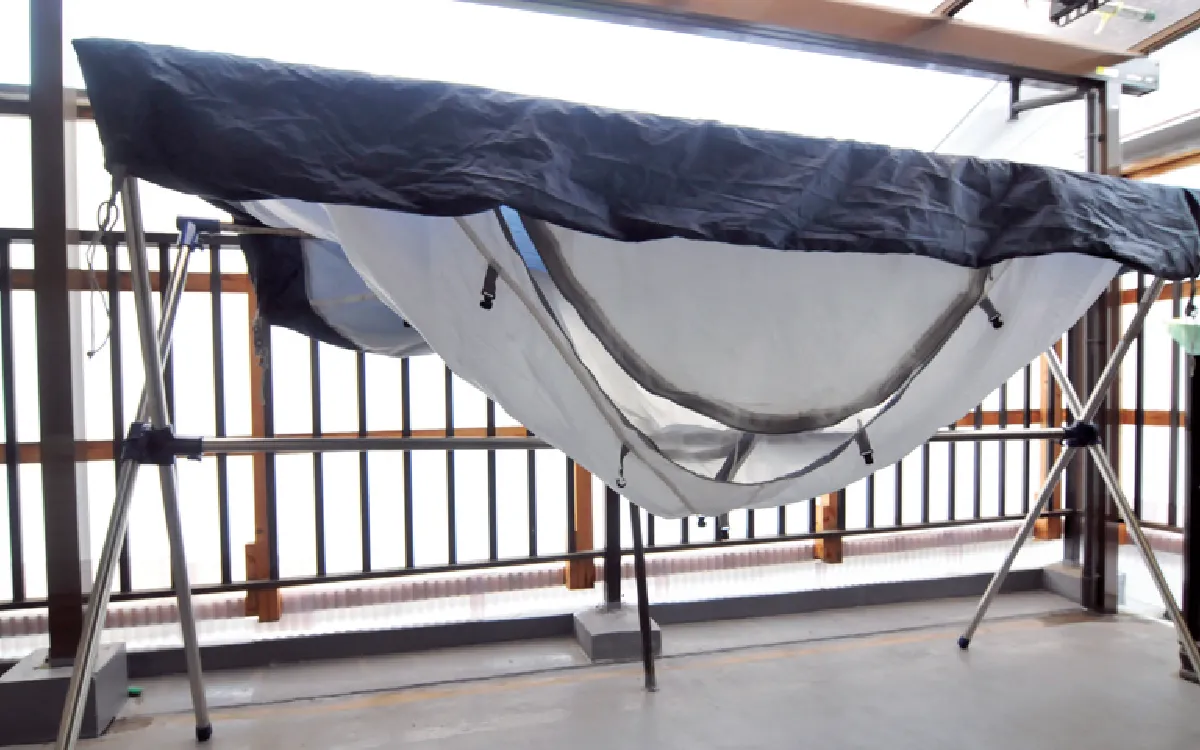
Spread it out in the shade to dry. When hanging it to dry, use the tape or pole receptacles at the edges of the main body. Please refrain from directly clipping the fabric, as this may damage the ultra-lightweight material.
When hanging, do not use the elastic bands at the edges of the main body (as this could stretch the shock cord).
How to replace the shock cord
In the case of the stellaridge tent.
The method for replacing the shock cord varies depending on the tent.
This video is available only in Japanese. Please use subtitles or translation tools if needed.
Items needed for repair
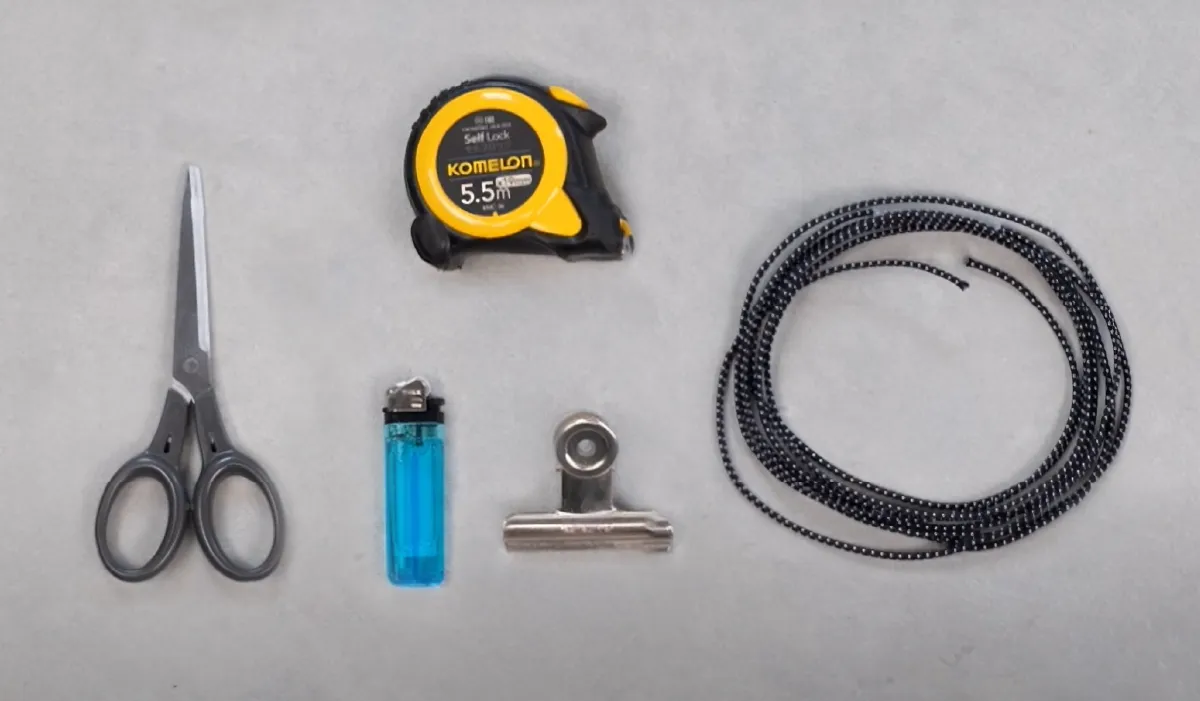
- Replacement shock cord (elastic cord) *Approximately 80% of the total length of the pole to be replaced
- Lighter
- Clip
- Measuring tape
For the replacement shock cord, use the 3mm shock cord available at Montbell stores and online shop.
Sold by the meter.
1. Cut the replacement shock cord to 80% of the original length
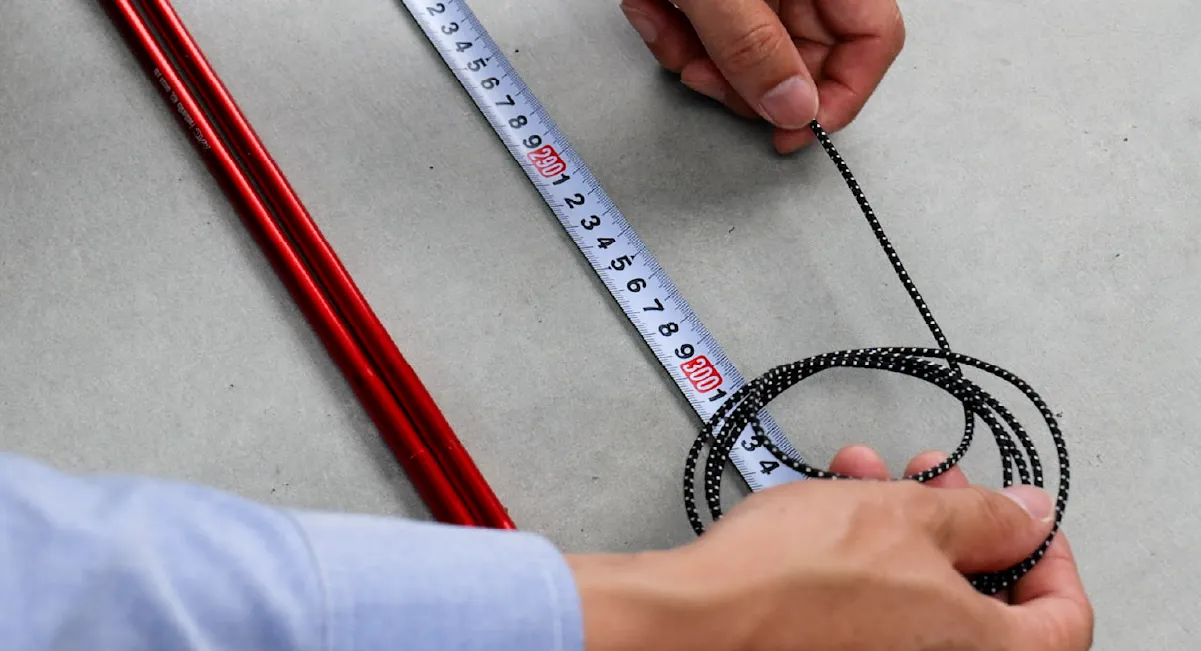
Cut to approximately 80% of the length
Extend the tent pole in a straight line and measure its length. Cut the shock cord to approximately 80% of the total pole length.
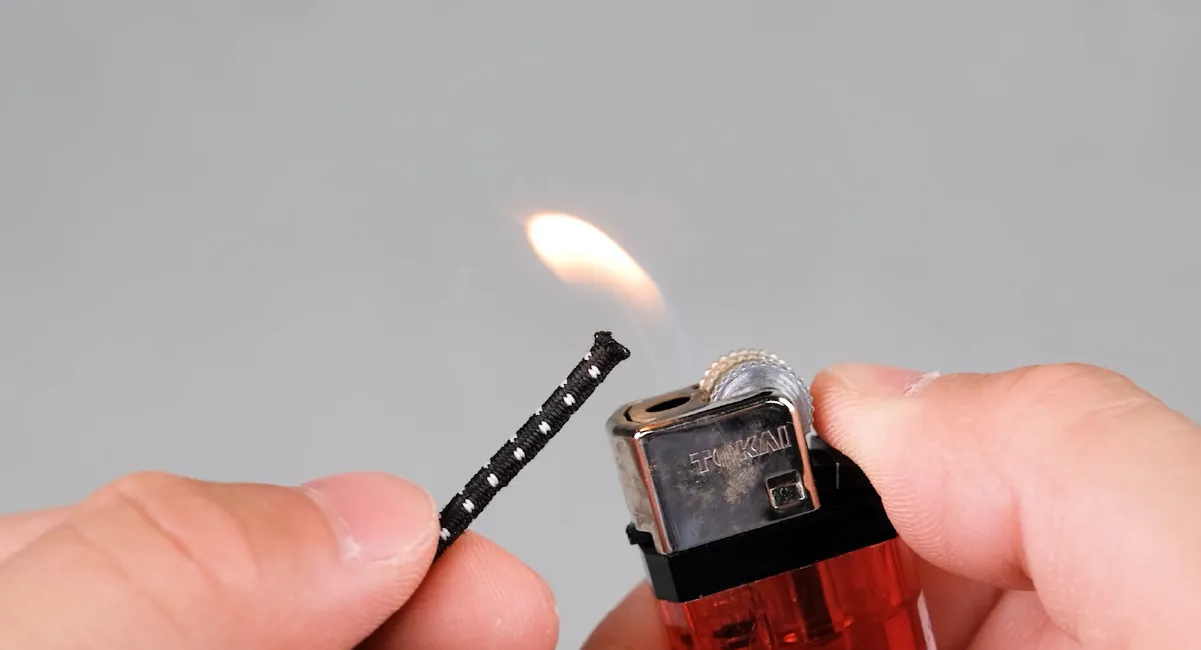
Use a lighter to singe the ends to prevent fraying
Lightly heat the cut ends with a lighter to prevent fraying.
2. Remove the old shock cord from the pole
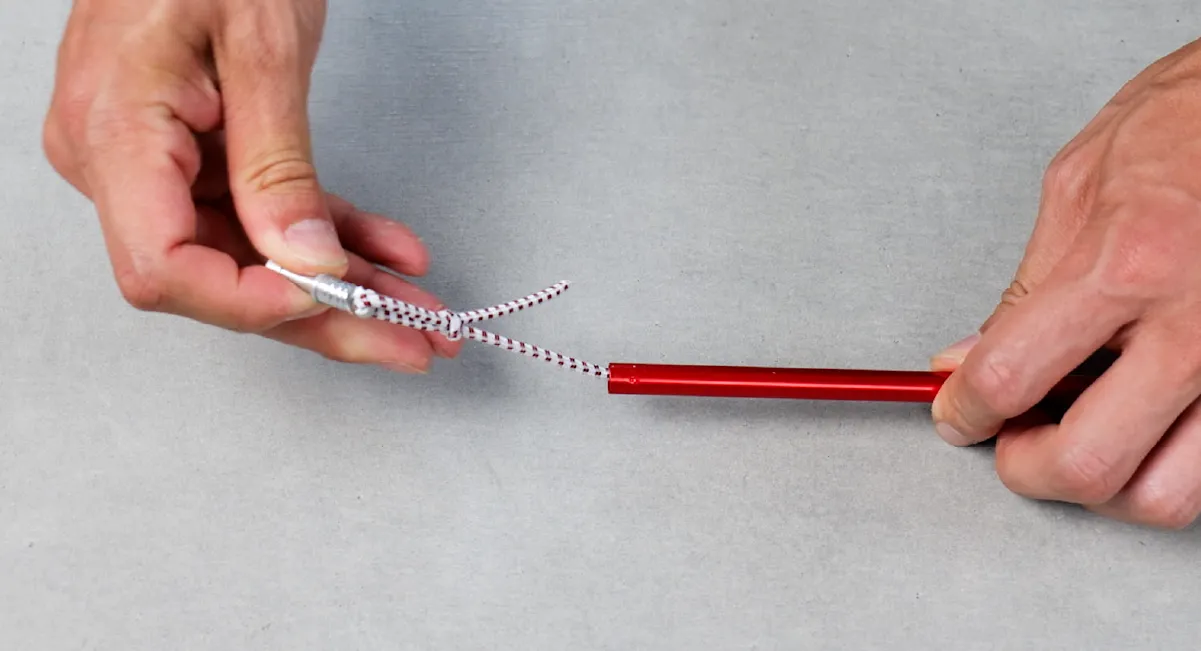
Remove the old cord from the end tip.
Remove the end tip at the pole's end by rotating it counterclockwise, and detach the shock cord that is tied to it. Do the same from the opposite end, and pull out all of the old shock cord.
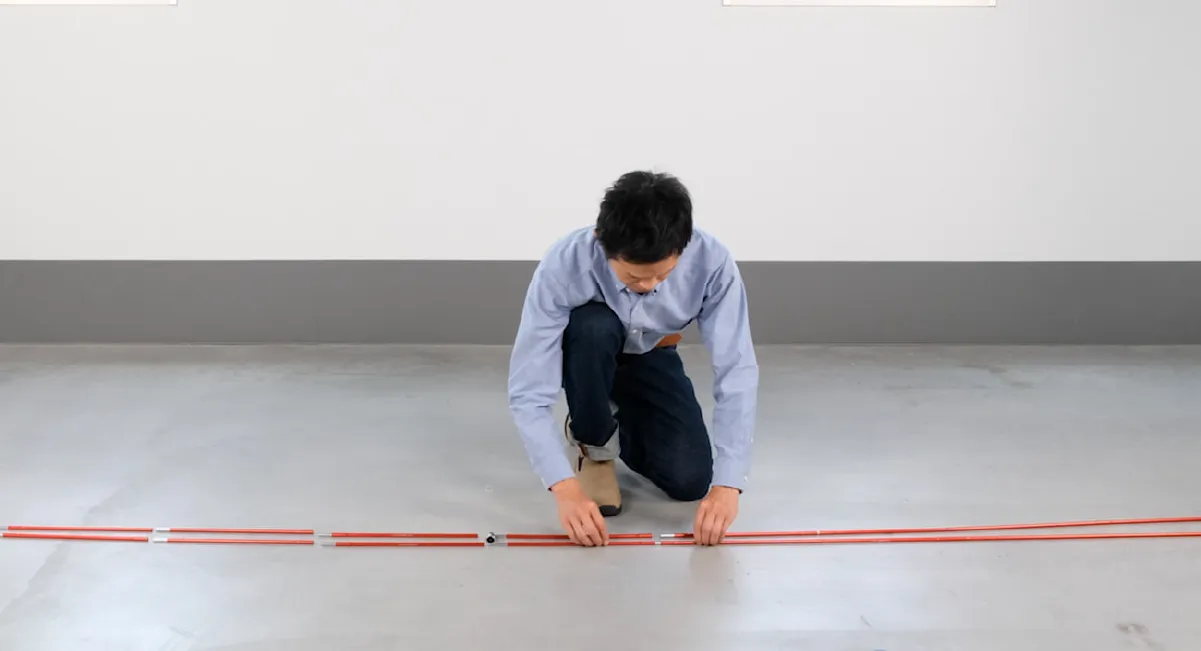
Once you've pulled everything out, lay them out in a straight line.
At this time, you will be taking the poles apart, so be careful not to mix up their order.
3. Thread the new shock cord through the poles.
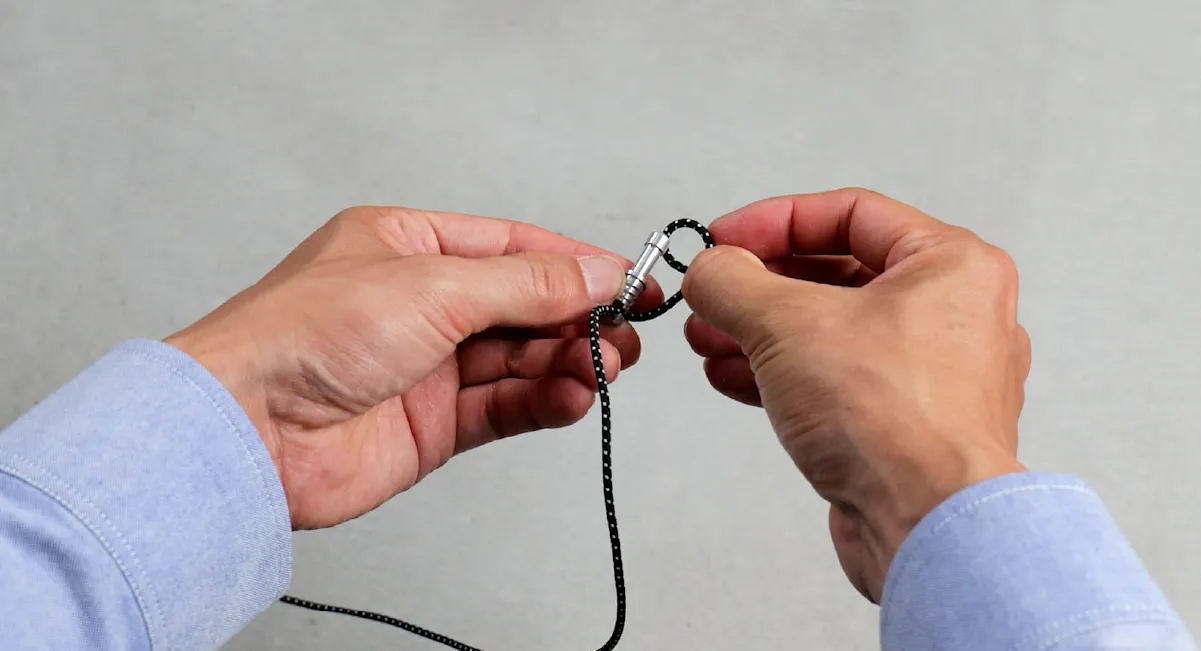
Tying the new cord to the end tip
Attach the new shock cord to one of the end tips and thread it through the pole section by section.
For detailed tying instructions, please refer to the video above.
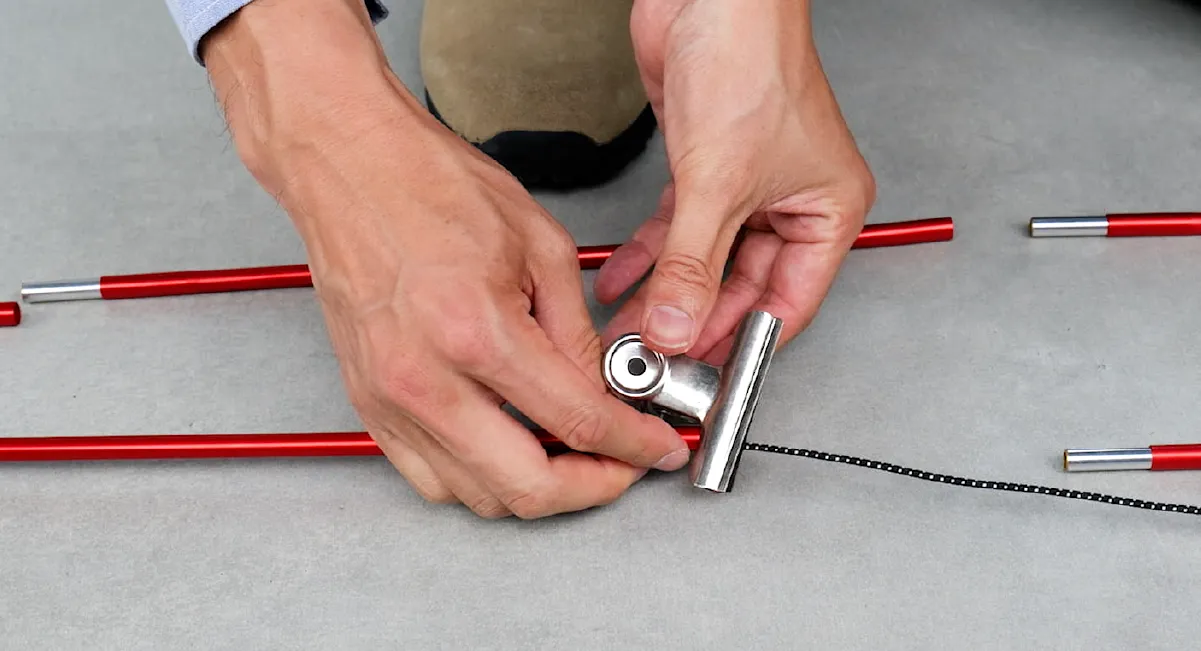
Threading the new cord
The more sections you thread through, the more you need to stretch the elastic cord. To prevent accidentally letting go, secure it with a clip while working.
Once you've threaded it through the last section, tie the shock cord to the end tip on the opposite side to complete the process.
How to replace bent poles
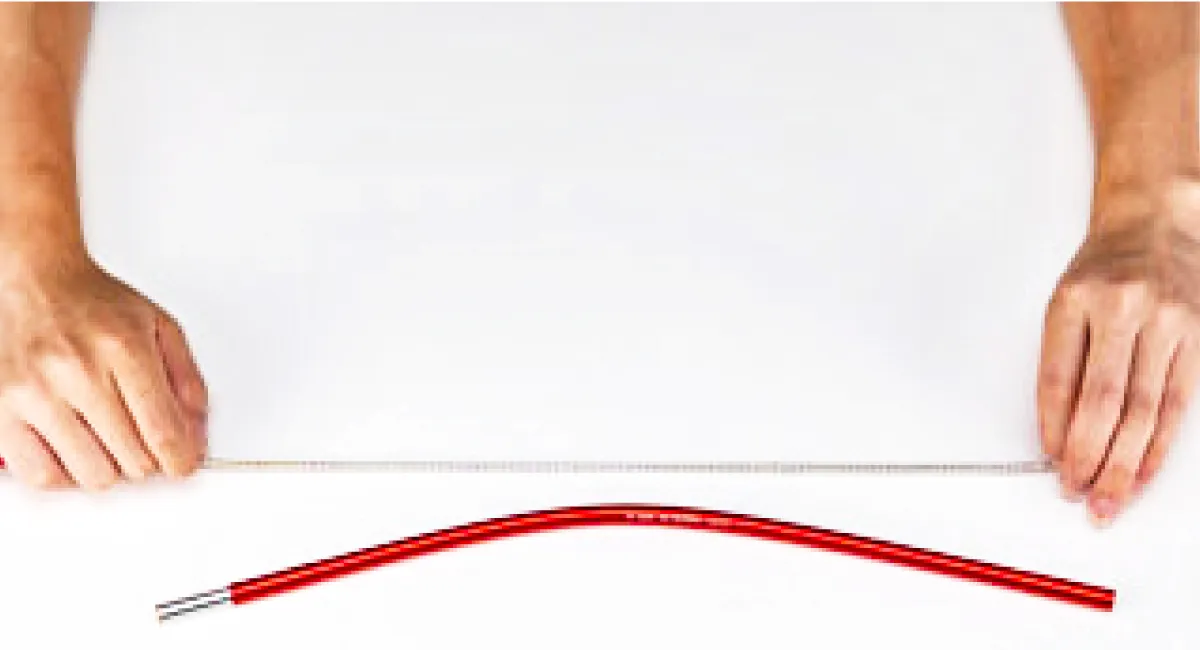
Replacing a bent pole section is done in the same way as replacing a shock cord. Replacement poles can be ordered individually for most models. For more details, please contact a Montbell store or Montbell Customer Service.
Some tent parts are also available in our online shop.
Example:
Some tent parts are also available in our online shop.
Example:
If a pole breaks while using the tent...
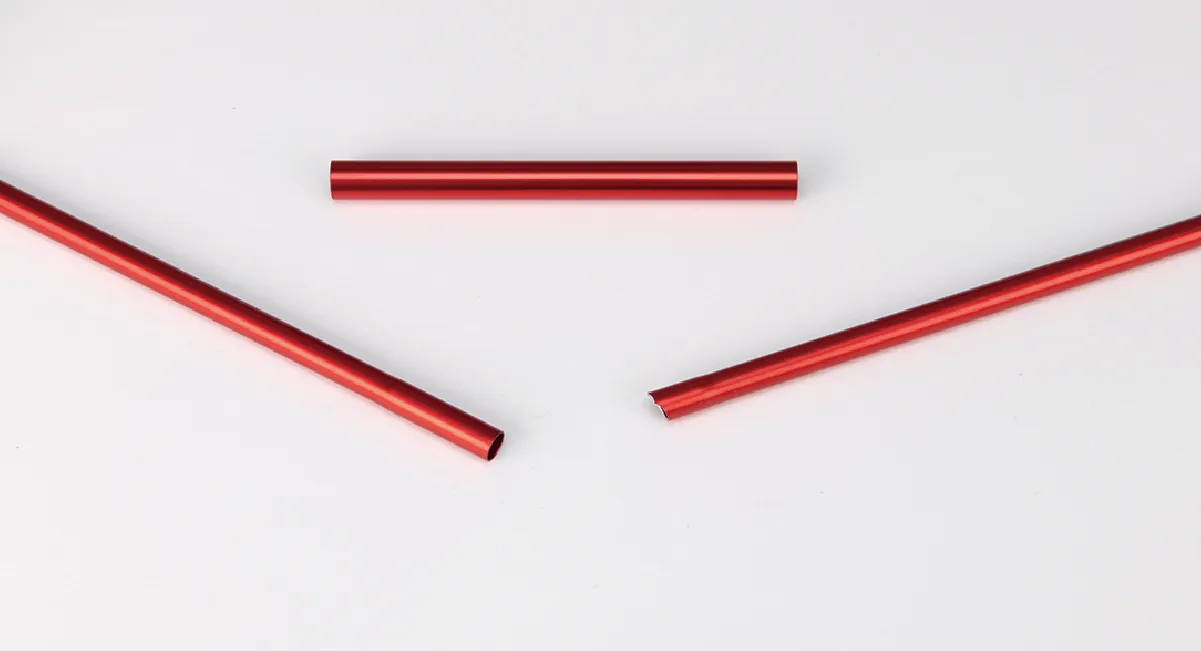
Temporary repair with the Pole Repair Sleeve
The repair sleeve included in the pole set when you purchased the tent is used to temporarily connect a broken pole with tape or other materials.
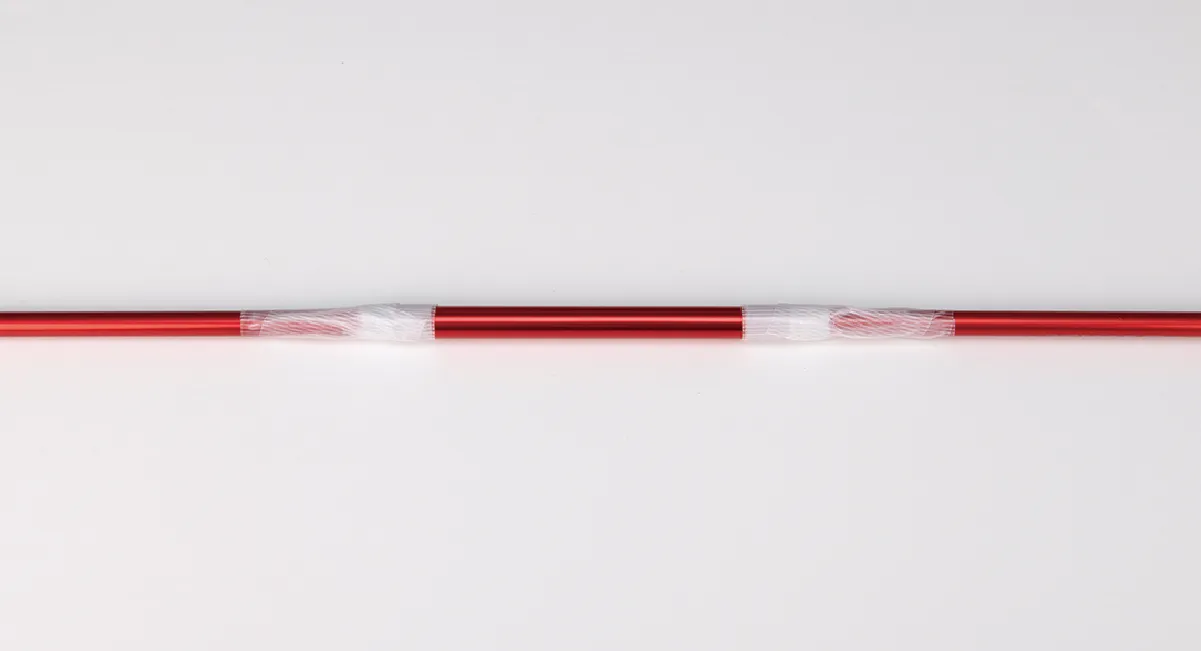
For a broken pole join with repair sleeve and tape
Duct tape or packing tape is required to secure the repair sleeve in place.
Storage method
Pole
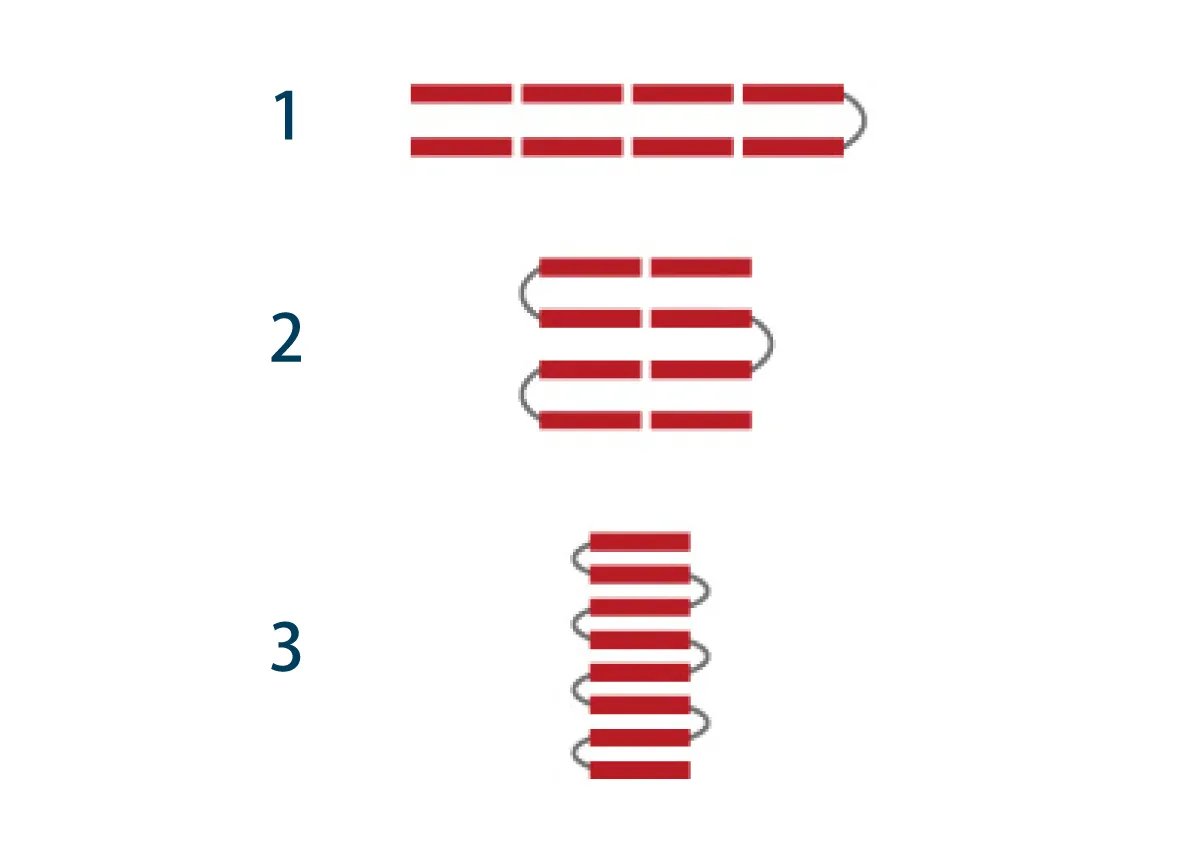
1. Fold in half from the middle.
2. Fold in half again from the middle.
2. Fold in half again from the middle.
- If the pole has an odd number of sections, folding near the center is fine.
- For long-term storage, keeping the pole extended will help the cord last longer.
Tent main body
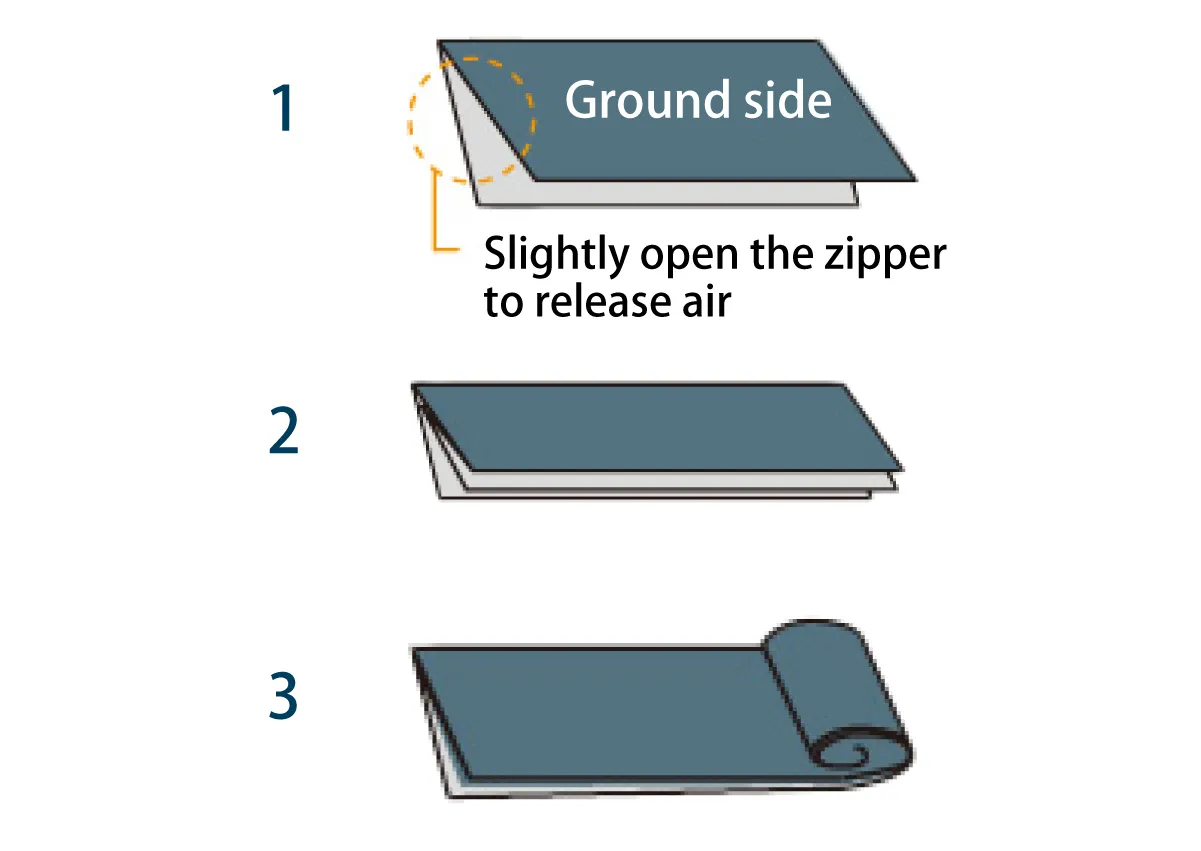
1. Fold the tent body in half with the ground side facing outward.
2. Slightly open the entrance zipper and continue folding while creating a path for air to escape.
3. Roll up from one side all the way to the end.
2. Slightly open the entrance zipper and continue folding while creating a path for air to escape.
3. Roll up from one side all the way to the end.
Please be careful to fold the tent while removing small stones and twigs. Debris rolled up in the tent may damage the fabric or coating, potentially creating a point where water can penetrate.
Rainfly / Tarp
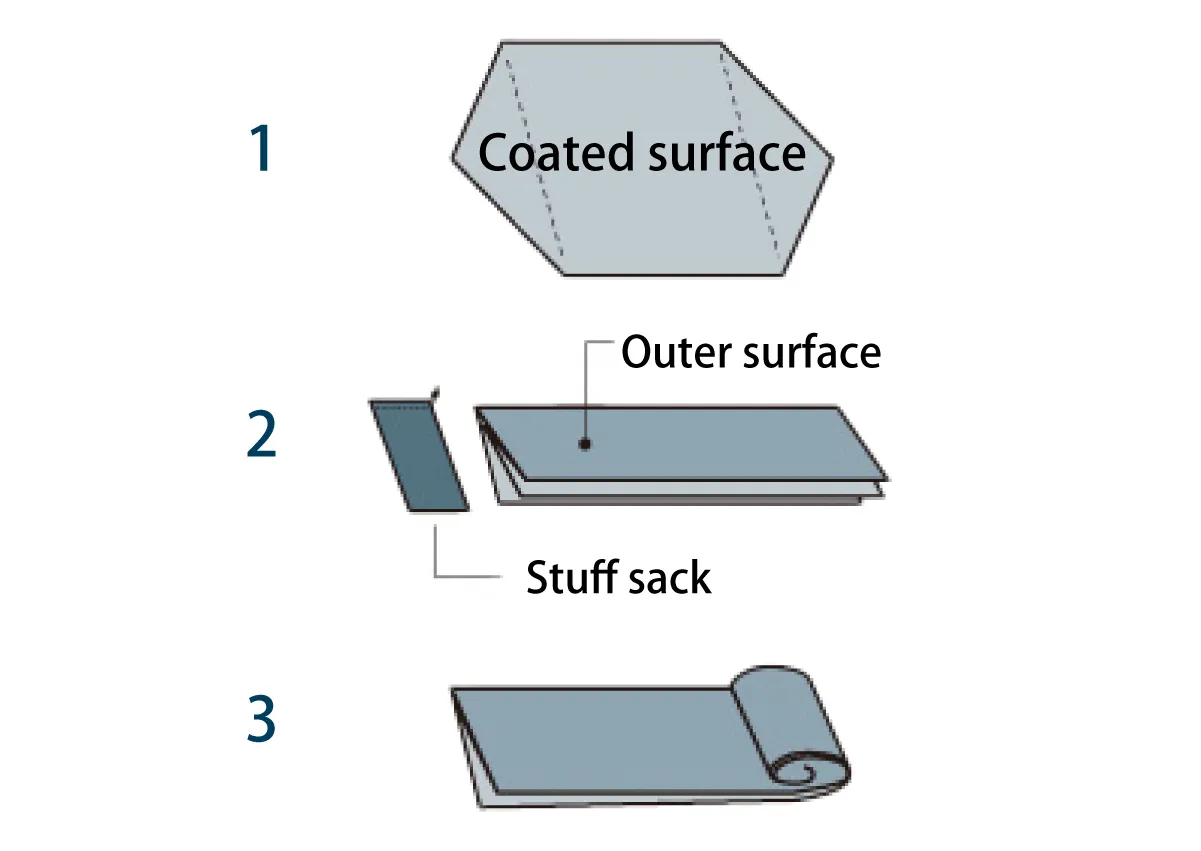
1. Spread it out with the outside facing down so that the coated surface is on the inside when folding.
2. Fold until it's the same width as the depth of the stuff sack.
3. Roll up from the edge to form a cylinder.
2. Fold until it's the same width as the depth of the stuff sack.
3. Roll up from the edge to form a cylinder.
When storing the tent in its stuff sack
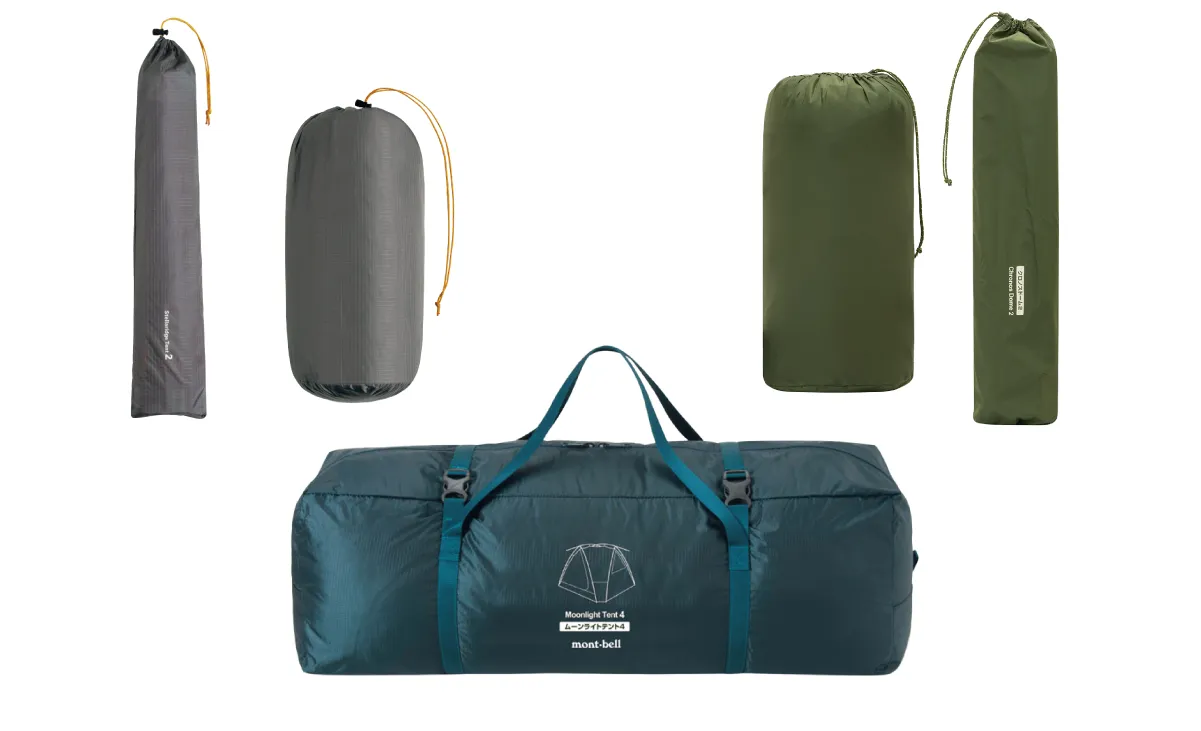
If a stuff sack type storage bag is include
Please roll up the tent body together with the rainfly as the core and store it.
If a duffel bag type storage bag is included
Please roll up the rainfly and tent body separately and store them.
Things to be careful about when storing
Avoid direct sunlight
Avoid direct sunlight as it can damage the fabric.
Avoid high temperature and humidity
Avoid places that become hot and humid, such as inside cars or outdoor storage sheds/garages. Choose a place with good ventilation where the temperature doesn't rise.
Spread it out occasionally
When not in use for an extended period, spread it out on a sunny day about once every six months to remove moisture and check its condition.
Storage method using dry storage bags
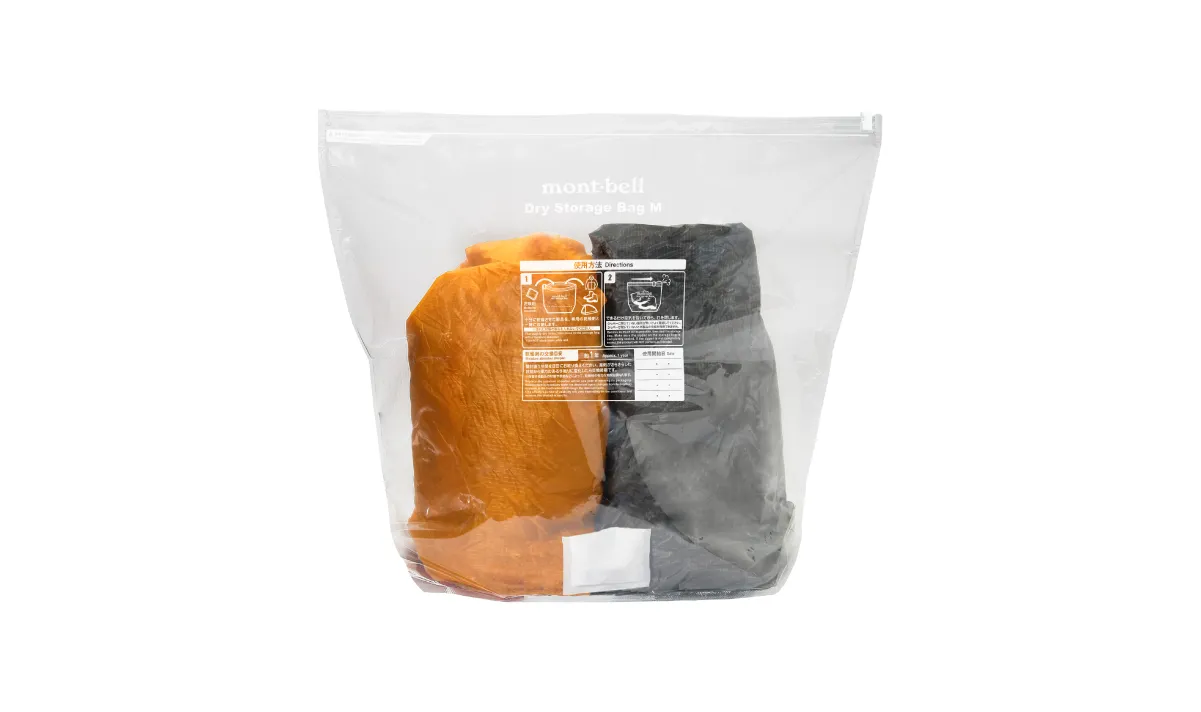
By storing the tent in a dry storage bag, you can protect it from moisture and reduce deterioration from hydrolysis.
1. Thoroughly dry the tent and tarp.
2. Fold them according to the storage method described above.
3. Place them loosely in the dry storage bag with some extra room.
4. Remove an appropriate amount of air and seal the zipper.
1. Thoroughly dry the tent and tarp.
2. Fold them according to the storage method described above.
If you store them while still in the stuff sack, the dry storage bag will not be able to perform as intended.
3. Place them loosely in the dry storage bag with some extra room.
4. Remove an appropriate amount of air and seal the zipper.
- Do not pack tightly or compress the contents.
- The desiccant absorbs moisture from the air, so it isn't necessary to remove all the air from the dry storage bag.


